Introduction
Choosing the right soldier boot is not only about appearance or basic durability. B2B buyers need to check materials, outsole strength, comfort, safety options, price, and delivery time before placing bulk orders.
From SONICE’s experience, many customers first ask about stock and customization. After further discussion, they usually focus more on price, lead time, and material quality.
This guide shares the top 7 soldier boot specifications that can help tactical gear wholesalers and procurement buyers reduce bulk order risk in 2026.
Specification 1: Upper Material for Durability and Comfort
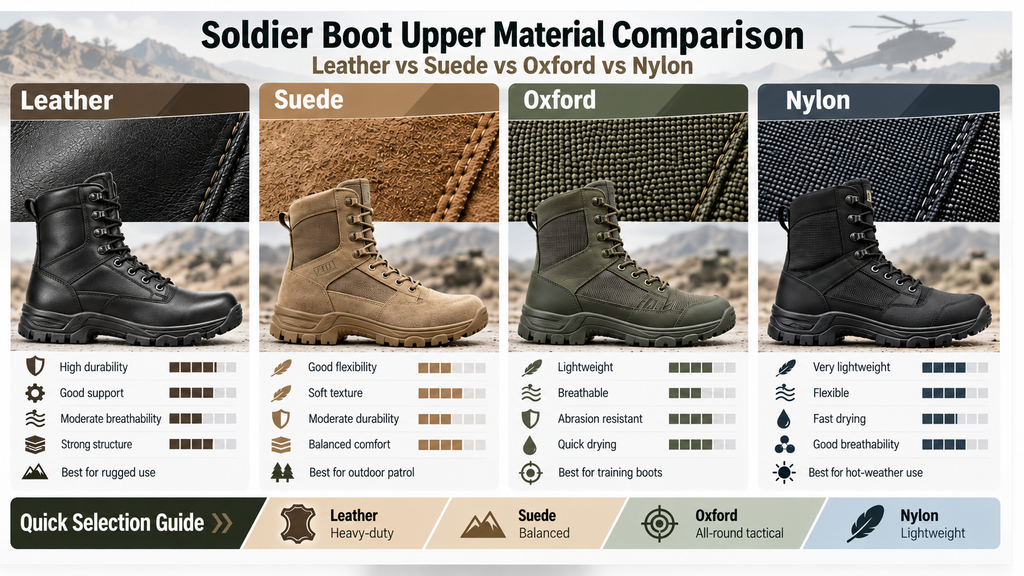
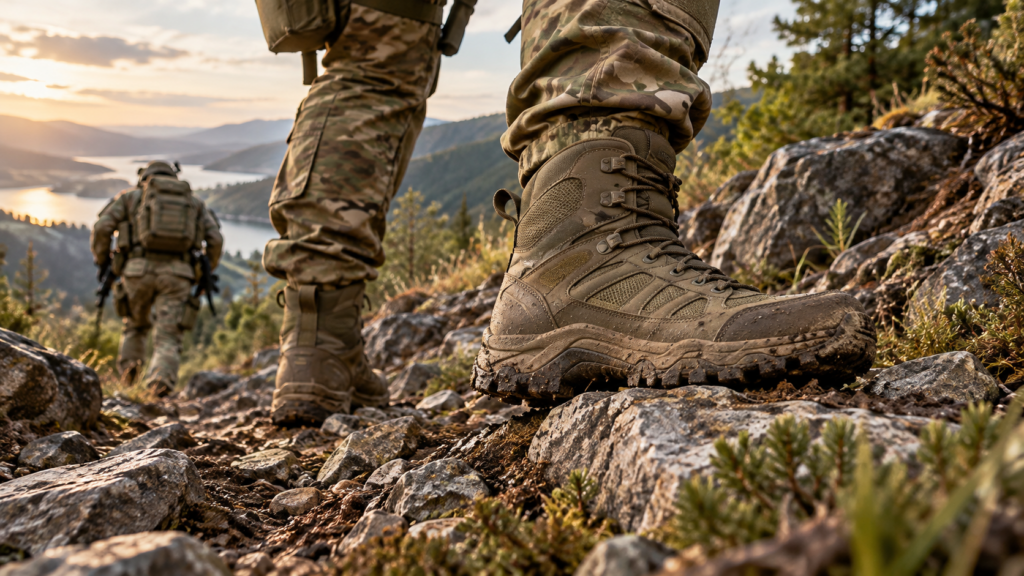
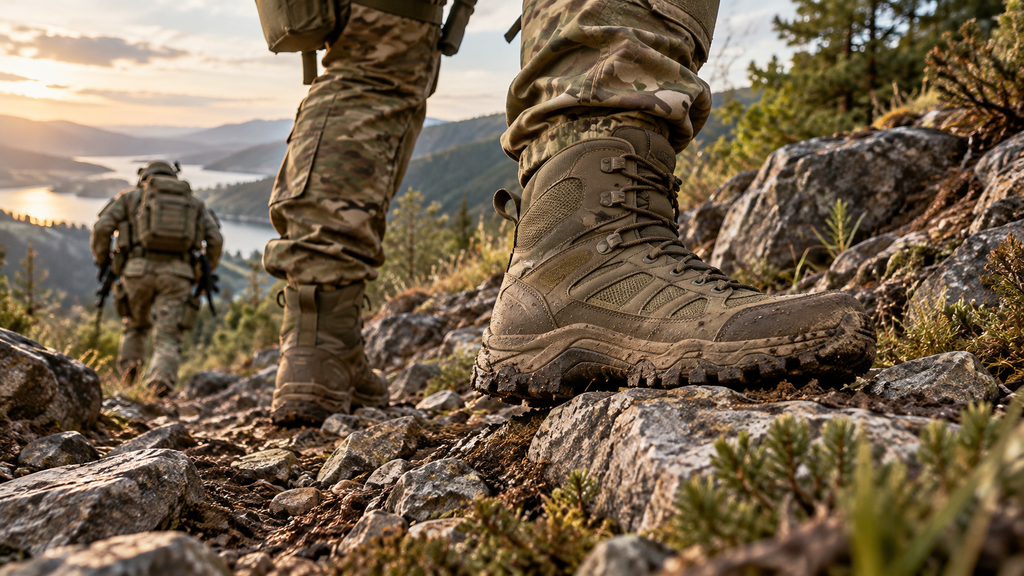
The upper material is one of the first details buyers should check. It affects the boot’s durability, comfort, water resistance, and total cost.
Common soldier boot uppers may include leather, suede leather, Oxford fabric, nylon, or mixed materials. Each option has a different balance of strength, flexibility, and price.
For long patrols or outdoor duty, the upper should support daily movement without breaking down too quickly. A cheaper material may reduce the first cost, but it may increase replacement risk later.
What Buyers Should Confirm
Before ordering, buyers should ask for clear material details. A product photo is not enough for a serious bulk order.
You can ask the supplier to confirm the upper material, lining material, thickness, color options, and water-resistant treatment. These details help you compare boots more accurately.
For first orders, many buyers prefer a proven material combination. It helps control cost and reduces the risk of unstable bulk production.
Specification 2: Outsole Material and Slip Resistance
The outsole decides how the boot performs on different ground conditions. For soldier boots, this part is critical.
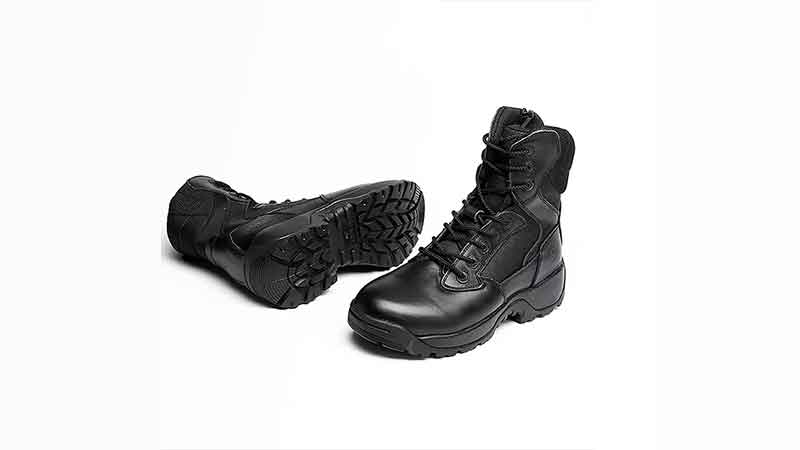
A good outsole should provide grip, wear resistance, and enough flexibility. It should also support users on wet roads, gravel, mud, and training fields.
Rubber outsoles are often used for tactical and military-style boots. The actual performance still depends on the rubber compound, tread design, and production quality.
Check the Tread Design
Tread depth and tread pattern affect traction. A deep tread may improve grip on outdoor surfaces, while a flatter outsole may work better for urban patrol.
Buyers should match the outsole design with the real use scenario. A boot for field training may need a different outsole from a boot for security duty.
If possible, request outsole close-up images or samples. This helps you review grip, flexibility, and wear resistance before bulk production.For outsole performance, buyers can also review footwear slip resistance testing methods when comparing tread design and sole materials.
Specification 3: Water Resistance and Weather Protection
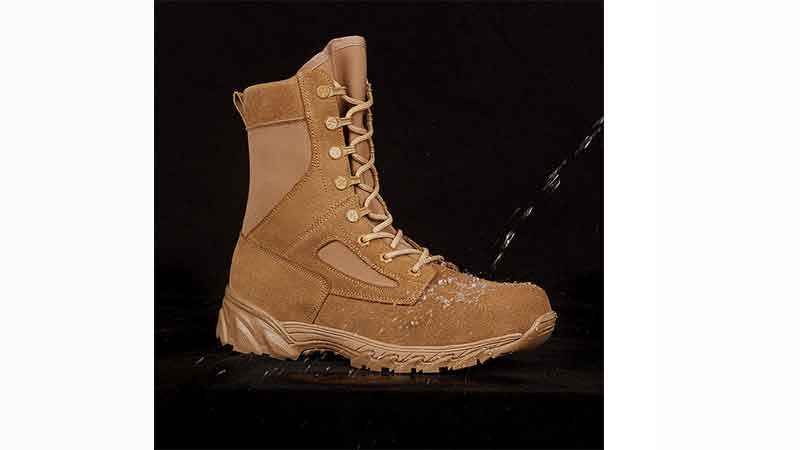
Water resistance is often important for soldier boots. Many users work outdoors, where rain, mud, and wet ground can affect comfort.
A water-resistant boot can help keep feet drier during daily duty. It can also improve user satisfaction in outdoor and field environments.
However, water resistance can also affect cost and production time. Buyers should confirm whether they need basic water resistance or stronger waterproof performance.
Avoid Over-Specification
Not every project needs the highest waterproof level. Some buyers only need basic protection for light rain or wet ground.
For heavy outdoor use, buyers may need better lining, seam treatment, or special materials. These options should be confirmed early.
Clear requirements help suppliers quote more accurately. They also help buyers avoid paying for features that are not needed.
Specification 4: Toe Cap and Safety Options
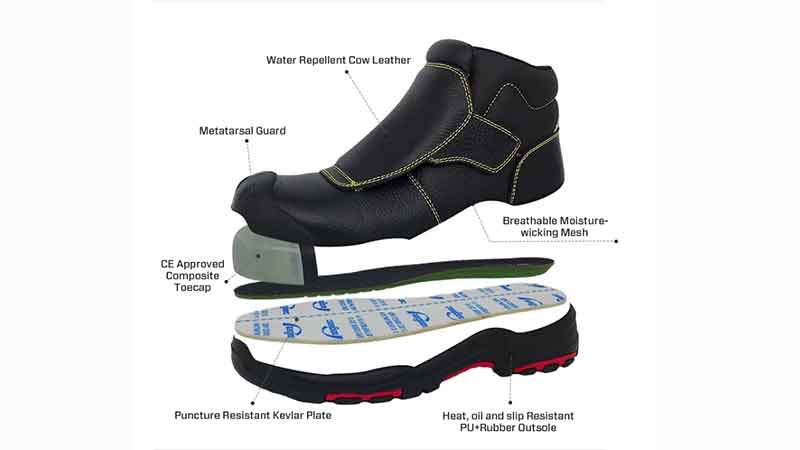
Some soldier boot projects require toe protection. This can include steel toe, composite toe, or other safety toe options.
A composite toe is lighter than steel toe in many cases. It may also be useful in projects where metal detection is a concern.
Steel toe options may offer strong protection, but they can add weight. Buyers should choose based on the real working environment, not only the product name.
When Safety Toe Options Matter
Safety toe options are useful for industrial security, logistics, construction support, or field work with impact risks.For workplace foot protection, buyers can also review OSHA foot protection requirements before confirming safety toe needs.
For general tactical resale, a standard non-safety toe boot may be enough. It can reduce weight and help control cost.
Before ordering, buyers should confirm the target user. This avoids choosing a heavy safety boot when a lighter tactical boot would work better.
Specification 5: Ankle Support and Heel Stability
Ankle support is a key part of soldier boot performance. It helps users feel more stable during patrol, training, and outdoor movement.
A good boot should support the ankle without making movement too stiff. The heel area should also hold the foot securely.
Poor heel support can cause discomfort during long wear. It may also lead to complaints after delivery.
Check Fit Before Bulk Orders
Sizing is not only about length. Buyers should also consider width, heel fit, and overall comfort.
A size chart is useful, but sample testing is still important. Different markets may have different fit expectations.
For repeat orders, size stability matters. A stable size system helps reduce returns, complaints, and replacement costs.
Specification 6: Stitching, Bonding, and Construction Quality
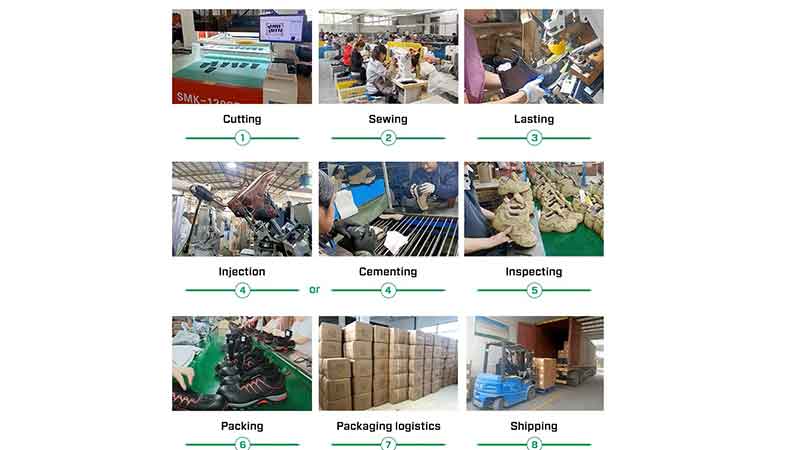
Construction quality affects how long the boot can last. Strong materials are not enough if the stitching or bonding is weak.
Buyers should check high-stress areas, such as the toe area, side panels, heel, and outsole connection. These parts often receive more pressure during daily use.
A well-made soldier boot should have clean stitching and stable bonding. It should also maintain its shape after repeated wear.
Review Samples Before Production
Sample approval helps buyers confirm workmanship. It also gives the supplier a clear standard for bulk production.
During sample review, check the stitching, glue line, outsole bonding, lining, eyelets, and lace system. These small details can affect the final user experience.
For B2B buyers, this step reduces the gap between sample quality and bulk order quality.
Specification 7: Customization, Packaging, and Lead Time
Customization is common in soldier boot procurement. Buyers often ask for logo, color, outer carton marks, and packaging options.
Some requests are easy to manage. Logo and carton marks usually have less impact than outsole mold changes or special functional treatments.
From SONICE’s experience, many buyers first ask for complex customization. Later, they choose standard or stock models to reduce cost and shorten lead time.
SONICE Bulk Order Insight
Opening a new mold can affect both price and delivery time. Special treatments may also require extra testing or material preparation.
For first orders, a standard model can be a safer choice. Buyers can add simple branding and test the market first.
This approach helps reduce cost, shorten delivery time, and avoid unstable sample-to-bulk quality.
Soldier Boot Procurement Checklist
Before confirming a bulk order, buyers can review these points:
Specification
| What to Check |
Upper Material | Leather, suede, nylon, Oxford, or mixed material |
Outsole | Rubber compound, tread design, grip, wear resistance |
Water Resistance | Basic water resistance or stronger waterproof needs |
Toe Cap | Steel toe, composite toe, or non-safety toe |
Ankle Support | Height, padding, stability, movement comfort |
Construction | Stitching, bonding, heel, outsole connection |
Customization | Logo, color, carton marks, packaging, mold needs |
Supply Terms | MOQ, sample time, bulk lead time, FOB terms |
Documents | Test reports, size chart, product specification sheet |
This checklist helps buyers compare suppliers more clearly. It also reduces mistakes before sampling and production.
Standard Model vs Custom Soldier Boot
Option | Standard Model | Custom Soldier Boot |
Cost | Custom Options | Higher development cost |
Lead Time | Usually shorter | Usually longer |
MOQ | More flexible | May require higher quantity |
Sample Risk | Lower | Higher |
Best For | First orders and market testing | Mature long-term projects |
Custom Options | Logo, color, carton marks | Mold, outsole, special materials |
For many tactical gear wholesalers, standard models are a practical starting point. They help buyers test quality before investing in full OEM development.
Why Choose SONICE for Soldier Boot Procurement
SONICE supports B2B buyers with tactical footwear, OEM options, sample support, and bulk order communication.
We help customers compare standard models, stock options, material choices, customization plans, and delivery schedules before production.
Our goal is to help buyers choose soldier boots with stable quality, reasonable cost, and reliable supply.Buyers can also check whether a supplier follows an ISO 9001 quality management system when evaluating production control.
Get Instant Quote
Looking for soldier boots for tactical gear wholesale, security supply, or military-style procurement?
Send SONICE your quantity, target price, size range, material preference, color, logo request, packaging method, and delivery schedule.
We can help you compare standard models, stock options, and custom solutions before bulk production.