

Introduction
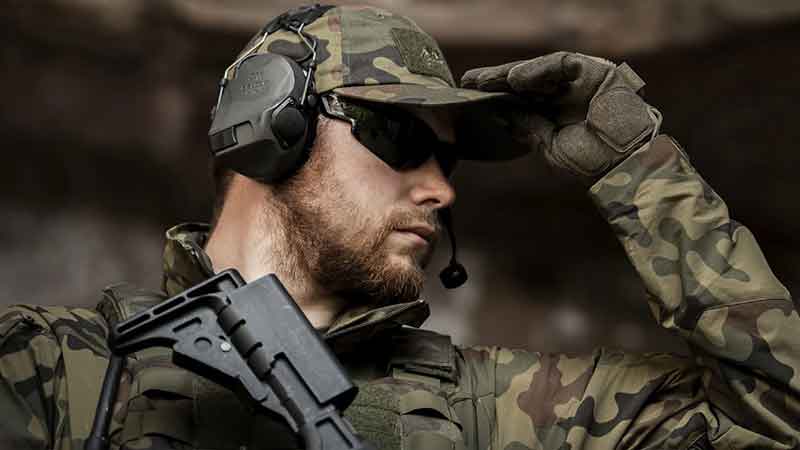
Choosing the right hearing protection for shooting is not only about noise reduction. Buyers also need to check compliance, comfort, product functions, and supply stability.
At first, many buyers ask about NRR, SNR, price, available models, or electronic functions. After sample testing, they often focus more on fit and product consistency. They also want to know whether bulk production can match the approved sample.
Electronic features can affect both cost and lead time. The same applies to Bluetooth, communication functions, gel pads, and customization.
This guide shares 7 practical checks for procurement teams. These checks can help reduce bulk order risks and support better product selection.
Check 1: Confirm Hearing Protection Performance and Compliance
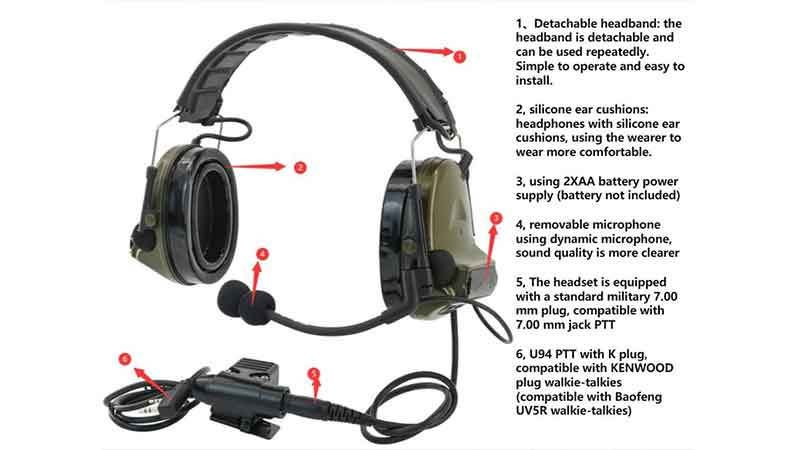
For shooting hearing protection, price and appearance should not be the first factors to compare. Buyers should first confirm whether the product can meet the protection requirements of the project.
A suitable product should provide stable hearing protection during shooting training, range duty, security work, or tactical operations.
Check NRR, SNR, and Protection Requirements
NRR and SNR are commonly used when buyers compare hearing protection products. Procurement teams should confirm which rating or test requirement applies to their target market or project.
The claimed protection level should also match the intended use. Indoor ranges, outdoor training, and tactical operations may have different requirements.
Shooting environments create sudden and strong noise. Buyers should therefore look beyond a single number and review the overall hearing protection solution.
NRR | SNR |
Commonly used in the U.S. | Commonly used in Europe |
Noise Reduction Rating | Single Number Rating |
Used for hearing protection evaluation | Used for hearing protection evaluation |
Check project-specific requirements | Check market-specific requirements |
Ask for Supporting Product Information
Before approving a model, buyers can ask the supplier for available test information, specifications, and product documents.
This makes it easier to compare models and reduces uncertainty before sample testing.
SONICE Procurement Insight
From SONICE’s experience, buyers usually ask about protection performance and product documents before discussing a large order.
This is an important step. A low price offers little value if the product does not match the actual project requirements.

Check 2: Choose the Right Hearing Protection Type
Different users need different hearing protection designs.
Some applications require a low-profile solution for better movement. Others need over-the-ear protection for easier fitting and more consistent daily use.
Procurement teams should select the product according to the mission environment, equipment setup, and user role.
Compare In-Ear and Over-the-Ear Protection
In-ear protection can reduce bulk around the head. It may suit users who need more freedom around helmets, rifle stocks, or other equipment.
Over-the-ear muffs are easier to manage in many training and range environments. They can also provide a clear and repeatable fitting method for larger groups of users.
Neither option is suitable for every project. Buyers should test the actual product before making a bulk decision.
Check Rifle and Helmet Compatibility
For rifle users, hearing protection should not interfere with shooting position or cheek weld.
Buyers should also check compatibility with helmets, caps, eyewear, and communication equipment when these items are part of the user’s setup.
A product that feels comfortable during basic fitting may perform differently once the full equipment system is worn.
Check 3: Evaluate Electronic Noise Reduction, Bluetooth, and Communication Functions
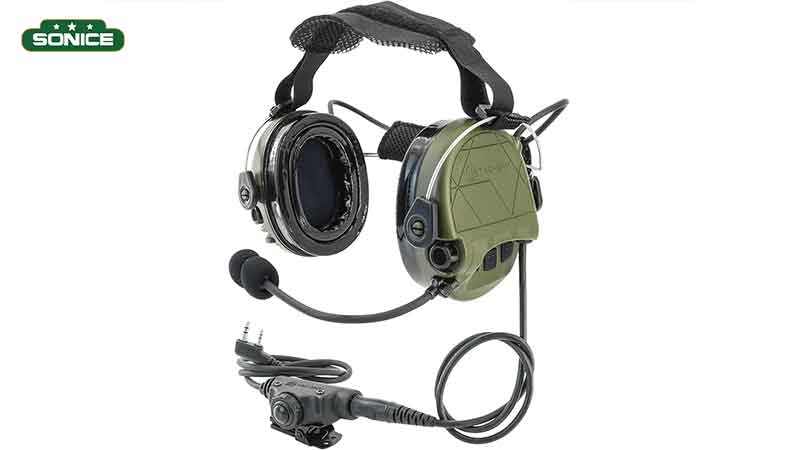
Electronic hearing protection can reduce harmful impulse noise. It also helps users hear commands and nearby sounds during training or patrol.
This function is useful for tactical range operations. It helps users stay protected while keeping better awareness of the field.
Buyers should check whether the product supports electronic noise reduction, Bluetooth, or communication functions. These features can improve field use.
They may also increase price and lead time, so buyers should confirm them before bulk orders.
Decide Which Electronic Functions Are Necessary
Not every buyer needs a high-spec electronic model. Some training programs only need stable hearing protection, while tactical teams may need communication support.
Procurement teams should separate must-have functions from optional features. This helps control cost and avoids paying for functions that users may not use.
Check Battery Life and Control Design
Electronic ear covers need reliable battery performance. If battery life is short, users may face problems during long training sessions or field operations.
Buyers should also check the control layout and button response. The product should be easy to adjust when users wear tactical gloves or work in outdoor conditions.
Check 4: Review Comfort, Fit, and Long-Wear Stability
Comfort affects whether users wear hearing protection correctly. If ear covers feel too tight, too loose, or too heavy, users may adjust them often or remove them during training.
For bulk procurement, buyers should test fit consistency and long-wear comfort before confirming large orders. Comfort is not only a user experience issue. It also affects real protection performance.
Check Headband Pressure and Ear Seal
Over-the-ear muffs need a stable seal around the ear. If the seal is weak, the actual protection level may drop during use.
Buyers should review headband tension and ear cushion quality. A good seal should remain stable without causing strong pressure during long training sessions.
Test Gel Pad Compatibility

Gel pads can improve comfort and sealing performance. They are useful for high-use training ranges and users who wear ear muffs for long periods.
Before buying gel pad kits, procurement teams should confirm model compatibility and replacement planning. The wrong pad size may reduce comfort or weaken the seal.
Check 5: Compare Durability for Indoor Ranges and Outdoor Field Use
Shooting ear covers may face different working conditions. Indoor ranges create repeated impulse noise, while outdoor use may involve dust, moisture, heat, cold, and rough handling.
Buyers should evaluate material strength and electronic reliability based on the real use environment. A product suitable for light range use may not be strong enough for field teams.
Choose Based on Indoor Range Conditions
Indoor ranges often create stronger reflected noise. Buyers may need higher noise reduction or double protection for long training sessions.
Over-the-ear electronic muffs are often suitable for sustained range duty because they provide a stable seal and easy user management.
Choose Based on Outdoor Range Conditions
Outdoor users may need more mobility and better situational awareness. Low-profile in-ear protection or behind-the-neck designs may work better for some teams.
Buyers should check retention during movement before bulk orders. Outdoor use can expose weak fit, poor battery covers, or unstable controls.
Check 6: Reduce Bulk Order Risk With Sample and Mass Production Consistency

A good sample does not always guarantee a good bulk order. Buyers often worry that the sample performs well, but mass production may show different fit, seal, or noise reduction performance.
This concern is important for B2B procurement. Procurement teams should confirm sample-to-bulk consistency before approving large shipments.
SONICE Bulk Order Experience: Stable Noise Reduction Matters
From SONICE’s experience, buyers worry most about whether bulk products match the approved sample. They also care whether noise reduction performance remains stable across the full order.
This is why suppliers should control materials, electronic modules, ear cushions, and assembly quality during production. Stable quality helps reduce complaints and after-sales risk.
Confirm Pre-Shipment Inspection
Before delivery, buyers should request inspection for appearance, function, packaging, and basic performance. For electronic models, the inspection should also include battery function, microphone response, and noise reduction operation.
Clear inspection steps help buyers reduce bulk order mistakes. They also make the delivery process easier to manage.
Inspection Item | What Buyers Should Check |
Appearance | Color, scratches, assembly |
Ear Cushion | Fit and consistency |
Electronic Function | Power and controls |
Microphone | Ambient sound response |
Noise Reduction | Basic function consistency |
Battery | Installation and operation |
Packaging | Label, quantity, accessories |
Logo | Position and printing quality |
Check 7: Control Cost and Lead Time Through Practical Customization
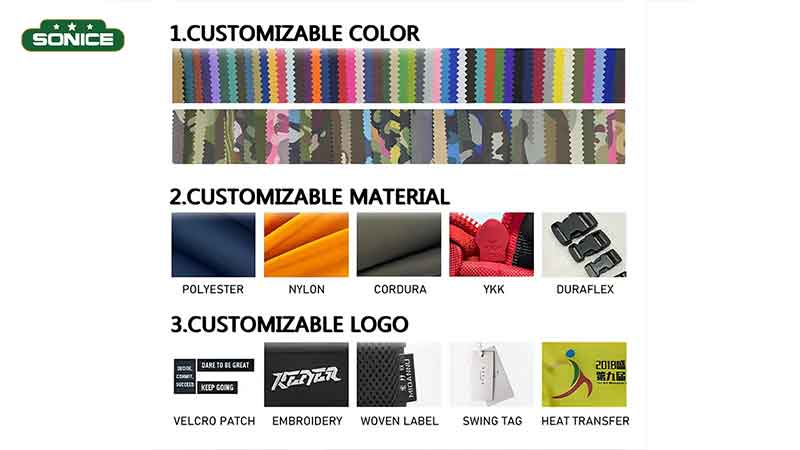
Customization can help buyers match product needs with brand, contract, or project requirements. Common options include logo printing, packaging, color, gel pads, Bluetooth, communication functions, and accessory kits.
However, customization can increase unit cost and production lead time. Buyers should confirm which options are necessary before requesting final quotations.
Understand What Affects Price and Delivery Time
Electronic noise reduction, Bluetooth, communication function, gel pad upgrades, logo customization, and special packaging can all affect cost. Some options also require longer preparation or higher MOQ.
Procurement teams should ask suppliers to explain the impact of each option. This makes the quotation more transparent and helps buyers choose a better cost-control strategy.
Choose Standard Models for First Orders
Some customers first request high-spec or fully customized ear covers. After reviewing price and lead time, many projects adjust to standard models or simpler customization.
The main reasons are lower cost and shorter delivery time. For first orders, a standard model with practical upgrades can reduce risk and help buyers test the product before larger procurement.
Final Recommendation: Choose Hearing Protection Based on Verified Procurement Needs
Buyers should choose Ear Covers for Shooting based on clear procurement needs. These needs include compliance, protection performance, comfort, function, durability, and bulk order stability.
A good product should protect users and support easier purchasing. For defense and security buyers, the safest choice is not always the most complex option.
A practical solution should balance noise reduction, user comfort, stable supply, and controlled cost. This helps buyers reduce risk before placing bulk orders.
Factor
| Standard Model | Full Customization |
MOQ | Lower | Usually higher |
Lead Time | Shorter | Longer |
Cost | Easier to control | Higher development cost |
Product Risk | Lower | More variables |
Logo | Easy to add | Fully customizable |
Packaging | Standard / light customization | Full custom |
Best For | First orders | Mature programs / large projects |
For first orders, start with a standard model and light branding when possible.
Get Instant Quote
Need Ear Covers for Shooting for training, range duty, security, or defense procurement? Send SONICE your NRR or SNR requirement, order quantity, usage environment, and electronic function needs.
You can also share your logo request, packaging needs, target price, and delivery time. SONICE will help you compare suitable options and choose a practical bulk hearing protection solution.